

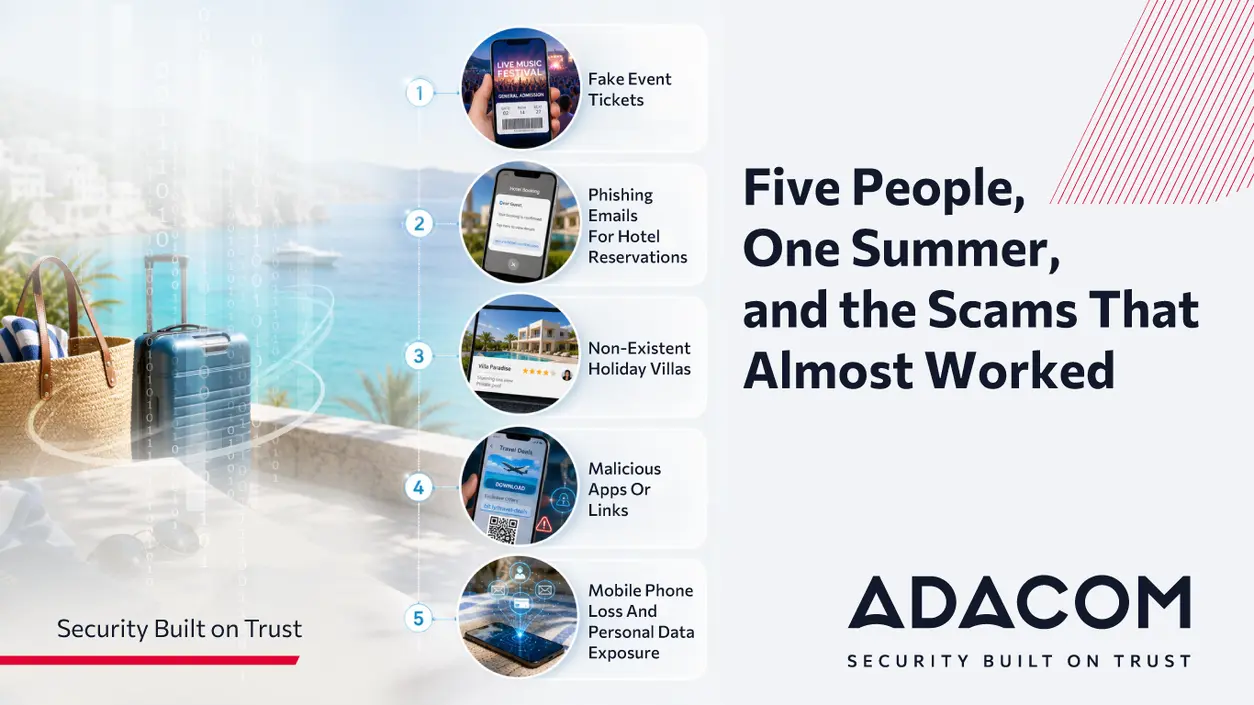
Every August, somewhere between the airport queue and the first cocktail by the pool, someone's vacation takes a wrong turn. Not because of weather or lost luggage, but because of a message, a link, or a too-perfect deal that arrived at exactly the right moment to be believed. These are five small stories from one ordinary summer.
None of the people in them is careless. And that’s exactly the point.
The Tickets That Were Never Coming
Dimitra had been trying to get tickets to a beach festival in Crete for three weeks. Official sales sold out in eleven minutes, which she found out the hard way when she refreshed a browser tab while the ice cubes in her frappe were melting. So when a post appeared in a local Facebook group, two tickets, slightly above face value, seller with a profile full of holiday photos and tagged friends, it felt like a stroke of luck rather than a setup.
The conversation moved to WhatsApp almost immediately. The seller was warm, quick to reply, a little chatty about the lineup. He suggested a bank transfer instead of the platform's buyer protection, because, he said, "the app takes a cut, and I just want this sorted before I leave for my own trip."
Dimitra almost sent the money. What stopped her was small: the seller's account had joined the group only nine days earlier, despite the photos suggesting years of friendships. She asked for a video call to see the actual tickets. The line went quiet, then the messages stopped altogether.
She still went to the festival. She bought from the official resale partner listed on the event page, paid a bit more, and didn't think about it again until a friend mentioned losing nearly 200€ to the same seller two days later.
The Hotel That Never Called
Yannis had a reservation confirmed for a long weekend in Nafplio, paid in advance, nothing unusual. Two days before check-in, a Viber message arrived from a number saved under no contact, but the sender's profile photo showed the hotel's actual logo. The message was polite, almost apologetic in tone: there had been "an issue verifying the card" used for the booking, and could he please confirm the details again through a link to avoid the reservation being canceled.
The dates were right. The hotel name was right. Even the booking reference number matched what was in his email. It was the kind of message that doesn't trigger suspicion, because suspicion needs a reason, and this gave none.
Yannis almost tapped the link on the way out the door. What gave him pause was simpler than any security advice he'd ever half-read: hotels don't usually ask for card details again over Viber once a booking is confirmed and paid. He called the hotel directly, using the number from his original booking email rather than the one that had texted him. The front desk had sent no such message. The booking was fine. The link, when a friend later opened it on a throwaway browser out of curiosity, led to a near-perfect copy of a payment page.
What stuck with Yannis afterward wasn't fear, it was how unremarkable the message had looked. No spelling mistakes, no strange formatting, just a logo and a deadline.
The Last-Minute Villa That Didn't Exist
Flora found the listing while scrolling during her lunch break: a four-bedroom villa with sea views near Parikia, available in five days due to a "cancellation," at less than half the going rate for the season. The site looked legitimate enough, photos, a booking calendar, even reviews. The catch, when she noticed it, was the payment method: a direct bank transfer to "secure the dates," with the explanation that card payments were "temporarily disabled due to a system update."
She'd been planning this trip with her sister for months, and the price made her want to believe it. She sent a message asking if she could pay a deposit through the platform instead and settle the rest on arrival. The reply came fast and a little too eager, repeating the urgency: other guests were "also interested," the price would only hold for a few hours.
She searched the photos using a reverse-image tool out of habit, not suspicion, and found the exact same villa, with the same photos, listed under three different names on three different sites, each with a different owner story. She booked elsewhere, for more money, and arrived in Paros without incident. The villa from the listing, as far as anyone can tell, was real. It just wasn't hers to rent.
The Boarding Pass That Wouldn't Scan
Nikos almost missed his connecting flight in Athens, not because of a delay, but because his digital boarding pass, saved in a wallet app he'd used for years without issue, wouldn't scan at the gate. The airline staff member tried twice, frowned, and asked him to step aside while she checked something on her screen.
It turned out the issue wasn't the airline's system. A few days earlier, Nikos had downloaded what he thought was an update to his ID wallet app from a link sent in an email that looked like it came from the airline, offering "faster digital check-in" for summer travel. It wasn't an update. It quietly altered the stored credentials so the pass appeared invalid during verification, without ever alerting him.
He eventually made the flight after the gate agent reissued a paper pass using his booking reference. But the experience left him rattled in a way the earlier near-misses hadn't, because this one had nothing to do with a message he could have ignored. It came from something already living on his phone, trusted simply because it had been there a while.
The Phone That Held Everything
Victoria's story didn't start with a scam at all. It started with a phone left on a café table in Rhodes for maybe ninety seconds while she went to pay at the counter. When she came back, it was gone.
What followed wasn't dramatic, no hackers, no late-night panic emails. It was the slow, sinking inventory of what that phone actually was: boarding passes for the flight home in four days, a banking app logged in by face recognition, every hotel confirmation for the rest of the trip, photos she hadn't backed up, and a digital ID wallet she'd been using all week instead of carrying her physical documents.
She spent the afternoon on hold with her bank instead of at the beach, freezing cards, resetting passwords from her boyfriend's phone, and re-downloading boarding passes from email. Nothing catastrophic happened in the end. But she said afterward that the moment that scared her most wasn't the theft itself, it was realizing how much of her actual identity had been sitting in one unlocked screen, and how little of it she'd thought to separate or protect before the trip began.
None of these five had done anything reckless. They'd booked tickets, answered messages, looked for a good deal, used the apps everyone uses. The difference each time came down to a small pause, one extra question asked before the next click. Summer doesn't need more caution than usual. It just asks for the same instincts people already have, used a moment earlier than when something asks them to hurry.
Enjoy a safe and relaxing summer!!